Greville Pabst on Street Secrets with Chris Bates
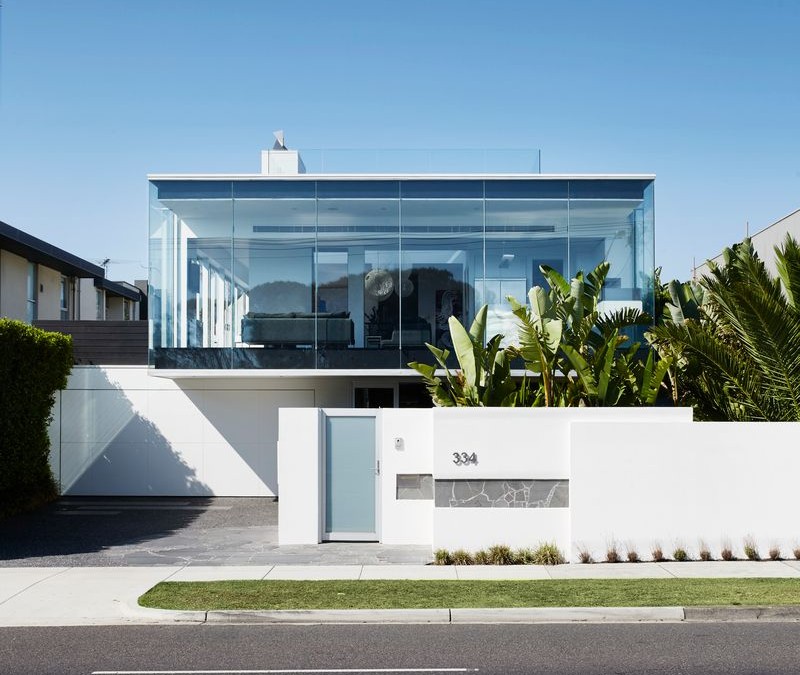
Greville Pabst joined Chris Bates on episode 52 of the Street Secrets podcast for a detailed look at the Albert Park and Middle Park market in bayside Melbourne.
The conversation begins with Greville's career, from the valuations course at RMIT in the early eighties and a first job with Westpac, through to founding WBP Group during the recession of the early nineties, and the off-the-plan losses he saw in the valuation business that drew him into property advisory work.
He explains how a valuation background changes the way he works as a buyer's agent, setting his own price rather than working from an agent's quote range, and lists the attributes that rule a property out for him, among them a main road position, a poor floor plan and the absence of a car space.
Much of the discussion turns to what underpins value in Albert Park and Middle Park, from the constrained geography and the heritage protected Victorian terraces to land rates among the highest in Melbourne.
Greville recalls the 1990 crash, when the high-end suburbs fell by half while these pockets barely moved, and closes on debt, patience and where he sees risk building offshore.
Transcript
Greville:Don't take on too much debt now, and be discerning about what you buy. Be careful about what you buy. Don't speculate. Just buy good property. I'm really careful about development property at the moment. Specialised stuff. Even in our valuation business, I'm cautious about what jobs we take on, because I know the riskier ones could fall over.
Our motto is buy without regrets. So if you can buy a property that will serve you for 10 years as opposed to three years, that will serve you well. It's not just about buying a great property today — it's also getting something that could be ripe for improvement when the time is right for that investor or for the next buyer.
You think about lifestyle: what's important to you, how do you get to work, what do you need for your family, what amenities like parks and shops. Then you look at the budget.
[Intro]Welcome to Street Secrets. I'm Chris Bates. I've been a mortgage broker since 2013, and in this podcast we're going to be interviewing Australia's leading buyers agents — ones with decades of experience, who have the local insider knowledge on the street and can really help you with your buying process. No matter whether you're a first home buyer or an upgrader, we get inside Australia's leading buyers agents' minds every week on a Thursday. What's the word on the street?
Chris: Welcome to Street Secrets. I'm Chris Bates. Super excited to have Greville Pabst in the studio today. You probably would have seen his face around, you would have seen his name around — semi-famous, I guess, within the property world.
We're going to go to probably one of the parts of Australia that I love the most: the bayside of Melbourne. You cannot knock the lifestyle of living in that area. I've done it myself before, and whenever I go to Melbourne that's absolutely where I want to live, where I want to stay. So thanks so much for joining us today, Greville.
Greville: Thanks, Chris. Not so much this time of year, when Melbourne is cold and wintry — and I've just got back from Europe, so I'm really feeling it. But it is a great place to live, lifestyle-wise.
Chris: Oh mate, when the summer comes around, you've got the sunsets back across St Kilda along Beaconsfield Parade. It's a pretty good place to live, and a stone's throw from the city as well.
Greville's Four Decades in Property
Chris: Before we go there, though — obviously you've got a big long career in lots of different elements. Just give us a rundown. Obviously the WBP connection as well. When did you actually become a buyers agent, and what were you doing before that?
Greville: I've been in property all my life. In Melbourne, finished school, didn't really know what I wanted to do. Got into the property valuations course at RMIT. That was in the early '80s, so that's a long time ago. You probably weren't even born, Chris. You were probably in short pants.
So, started there. First job was as an in-house valuer with Westpac. And then rode the 1980s boom — the biggest boom I've ever seen, probably the biggest boom I'll ever see in my career. And the biggest crash I've ever seen and probably ever will see. So, the '89–'90 crash.
From Three Valuers to 200+ Staff
Greville: Got retrenched in that recession in the early '90s like many of us, and then went and worked with FitzRoys, which is a commercial real estate firm, doing valuations there in the city in Collins Street. And then formed WBP with a mate of mine from uni in about 1992, 1993. So a long time ago, back in the recession.
We've been building that business ever since. It started with just three of us. It's grown from humble beginnings to — at one point we got up to about 280 people. We're still in the 200s, but yeah, it's a big business now.
The changes the government will probably do will give us a bit of a kick along next year with capital gains tax. Everybody's going to have to get a capital gains tax valuation as of 1 July 2027, so we're gearing up for that.
It's a pretty resilient business, valuations. People get divorced, people die, rating objections. So yeah, it's a very resilient business.
The Off-the-Plan Mistakes That Changed Greville
Greville: But I did see, particularly in the 2000s, the proliferation of apartments in Docklands and everything else. And I started to see in the valuation business people making mistakes when they bought property — developers, and unscrupulous developers. I can still remember the name Henry Kaye, big in those days. I had a run-in with him, and from that day on I sort of thought, yeah, it's just not right — how you can rip off mums and dads. They can pay 50, 60 grand more off the plan for a property than what it's actually worth, and the valuation comes in, it doesn't stack up, and they're caught out.
So that's what really got me into the advice side of the business. I'm really passionate about it, because it's about helping people. For me it's not about the transaction and taking money. It's about doing the right thing and helping people and being able to sleep at night.
That's what we were talking about a bit earlier, before we started. That's what really disturbed me about the most recent times, where we have again a whole bunch of young buyers agents enter our industry, and people — mums and dads again — entrusting them with sometimes their retirement savings, their hard-earned money, to give advice. And many of them just didn't know what they were doing. They were buying properties they shouldn't be buying. They didn't really care so much; they only cared about the commission.
I saw so many examples of them buying properties they shouldn't have been buying for clients. Interstate buyers agents coming into Melbourne, buying in areas they didn't even know, like in country areas. I feel for those people. It's terrible, what they did.
So look, a good rain like we've had now just washes all of that away. In a way, an ill wind brings some good. It has a good clean out, and that's what we've had. What's left is people that have experience and know what they're doing. It's just about doing the right thing.
Chris: I think there are always these moments where you see stuff you don't like and you think, I just want to do something better. I saw that in the advice world. But I've seen it when I first started looking at the property world too — Melbourne was the hot spot, right, the high-density apartments. This was the 2015 boom, where a lot of people got stitched up in the off-the-plan space. It sounds like there was a previous one. Was that in the early 2000s you were talking about?
Greville: Yeah, early 2000s, when Docklands started. We saw it in our valuations business. We kept statistics on it — they were coming in anywhere between 10 and 30% discount to contract price. So they build them, and then 18 months later the bank sends out their valuer and says, "Oh well, look, sorry, contract price is X but valuation is lower." Complete surprise.
How a Valuer Assesses Property Price
Chris: So it sounds like you then moved into doing a bit more personal property advice for your clients, rather than the valuations business you were running. How has that valuation background helped you? Or did it also give you challenges sometimes, with the valuation versus the emotional valuation of what's actually going to get a deal done?
Greville: It's helped me enormously, because it gives me an advantage over most other people. You look at what the agents do with their ranges, and you can just say, don't even look at their ranges. I make my own mind up, because otherwise I'm wasting my client's time. They say, "Oh, it's going to sell for $700,000 to $770,000." Well, I know very well what it's going to sell for, because I'll do my own homework.
That's part of what I do for my client. The first important thing is to understand price. I don't rely on what the vendor's agent is going to tell me about price. I work on price myself. That's my job, and that's what an advisor's job should be — to do that independently of the agent. That's the first thing.
The Property Traits That Drive Long-Term Growth
Greville: And then do all your other due diligence that you should do. Check all the other things. What's the history of that property? What's the history of its growth? How did it perform in the last downturn? What's its compound growth? Because if it hasn't grown in the past, it's not going to grow in the future just because you bought it.
Every property has its own DNA. Some properties grow at 2% a year, some at five, some at 10, some go backwards after they buy it. You've just got to know which is which. And that happens for a reason. There are certain attributes that drive value.
If it doesn't have a car space, that's something I wouldn't buy. If it's on a main road, I don't buy it. If it's too small, I don't buy it. If it's a south-facing backyard, I generally won't buy it. Or west-facing backyard. Or if it's got a bad floor plan, I don't buy it.
So once you get rid of all those attributes that I know don't drive value, you get to this point where there's only a very small number of properties that tick my boxes. And it's not by fluke or luck — they're the types of properties that do perform over time.
But property is a long game too, and that's the other thing people need to remember. You need to hold property for a long time. You can't just hold it for five years, seven years, and expect to make a profit. You have to be able to hold it to ride out cycles. Therefore you have to be prepared to hold property for 15 years at least.
Chris: You've obviously gone through a few. In tougher times people learn the most, right? People realise that those things you mentioned matter — if you try to sell a property with any of those things, you can have a challenging time in tougher markets. What are some of the things you've learned in the last downturn in Melbourne? Melbourne's had a bit of a different run to the rest of the country, for lots of different reasons. Has it taught you any new lessons, or has it just reaffirmed all the things you saw in past challenging periods?
Why Melbourne Property Has Stalled
Greville: Look, I'm just surprised, because I look at fundamentals. That's the main thing I study and look very closely at — fundamentals. It's the fundamentals that drive property values.
So I look at population growth. Population and population shift is one of the things that drives property growth. Where people are coming into an area, there's demand for property. It's fundamental. It's a key driver for property. Melbourne has attracted probably more than any other capital city in Australia, and yet we haven't seen growth.
Then I look at supply. We've got no supply. We simply haven't got any supply, particularly of houses. We've been reasonably okay, better than the other states, at building apartments, but of houses we've got an undersupply. So we haven't ticked that box either.
You look at unemployment — it's been low. That's another tick. Interest rates have been reasonably low by historical standards. They're the main drivers when you think about it. So you've got all of those, and yet Melbourne hasn't moved.
Why hasn't it moved? It comes down to one of the other reasons: confidence. Property is all about confidence. It won't move without confidence. And in this state, in Victoria, we don't have confidence. That is because of policy settings, and because of government. That is the primary reason why we're in the position we're in.
Infrastructure — we're on steroids with the infrastructure in this state, the Big Build. Yes, we've paid way too much for it and it's gone crazy. But we've been on steroids. We have built so much infrastructure. Now, when you build infrastructure, that's good for property prices. You're closer to a freeway, you can get somewhere quicker. You build a hospital, that's great. That is always good for property values, and it will be good for property once it gets rusted on.
But people are still not confident. They're not feeling confident. And the other thing is, we're not making it easy for foreign investment. We need foreign investment. The settings for foreign investment — I know the Chinese aren't buying here. They might be buying up in the Gold Coast, they probably are, but they're certainly not buying in Melbourne. They're out of the market completely.
These are things that can be fixed. But why would you tax them at 13% stamp duty? You kill the investor market. 35, 40% of the market is investors — why would you kill that? You kill that completely. Why do you go and make 127 changes to the tenancy legislation and the building codes? It's like you're deliberately killing the market. You hate real estate agents. What is it?
Most real estate agents don't make that much money. It's a very small number, and it's got one of the highest rates of mental health issues and depression of all professions.
Chris: It's a really important point, because it's such a roller coaster ride for them. There are so many highs and lows, and the perception is they all drive fast cars and wear nice suits, but a very small percentage of them make money. Most of them are struggling and work very long hours. They get a bad rap.
What Makes Albert Park So Tightly Held
Chris: Now, you've made some good points there. Obviously there's a confidence issue, but confidence can shift. You change your government, a bit more of a focus, changing some things for foreign investment. I agree with you, that seems silly in a world where we need to build more, not less. Any money coming in to build is probably a good thing.
But think about Albert Park, Middle Park. It's such a landlocked pocket, which is what's great for prices — you don't want lots of land. What do you think it is? Is it really just that a lot of people are sitting on their hands and they're not willing to upgrade to that bigger heritage home, or they're not willing to spend money on the reno? Do you feel like once that's out of the bag a little bit, it will unlock a lot of that next round of growth, because it's just so desirable to live there, and with the wealth within the city there are only a few pockets that offer that lifestyle benefit?
Greville: It's such a fantastic area. I think most people want to live in that area. When you think about it, it's a very narrow peninsula. Very narrow, if you look at it, with the park as well.
On one side you've got Albert Park, so you can walk to the Grand Prix. You've got beautiful Albert Park Lake — you can walk the 5 k around it. Beautiful. On the other side you've got the beach. Then if you go down the other end you've got Middle Park Village, and at the other end you've got Albert Park Village. So it's bordered by some fantastic things.
You've got wide streets, mostly wide streets. You've got probably one of the best examples of Victorian architecture. And when I say that, it's the continuity of Victorian architecture — uninterrupted rows of terraces, which is important. And it's protected. You can't change it. You can't have developers come in and change it, as it's all protected by heritage overlays.
There's a pocket there called St Vincents Place which is unbelievable. If you ever get a chance, go down to St Vincents Place and have a look at it, because there are $10, $15 million beautiful big two-storey terraces and it's very English. It's a beautiful little street. There's a big wide median strip with a bowling green and a tennis court in the middle of it.
Then you can walk to Albert Park Village, which is really cosmopolitan, really trendy. You walk down that street and there's always someone you bump into — footballers, personalities. It's a place to be seen. It's almost overtaken South Yarra. South Yarra now has gone off the rails a bit. Albert Park is a really vibrant village. It's a great place to be.
Who's Buying in Albert Park and Middle Park?
Greville: It's expensive. Entry level for a single-fronted two-bedroom house — you won't get much change out of $2 million. You could probably pick up something at $1.6, $1.7 million, but that'll be a two-bedroom that needs work. And you can go up to $15 million, $20 million.
Chris: Are there any buyer profiles where you find they love it, but then they outgrow it — let's say the kids come? Do you find they'd often go to the eastern suburbs, the stereotypical Hawthorns or Camberwells, somewhere in the east? Or are they now saying, no, I'm happy with something a little bit smaller, we don't need the space, we've got enough school options around here? How are you seeing that demographic shift? Because it suits such a broad point — it suits the childless couples, it suits divorcees, single parents.
Why Bayside Owners Downsize Back to Albert Park
Greville: Good point. Look, once people are in there, a lot of them don't move. They just stay there long term. They never move out of the area.
But the buyer pool tends to come from further down bayside. They come out of the bigger houses in Brighton, Hampton — those bigger blocks. The kids grow up, then they downsize into something smaller in Middle Park, Albert Park.
That's what we did. When we first started, we bought a house in Albert Park, we had kids, we then moved down to Hampton, and the kids grew up and we moved back. Come back.
Why More Wealth Is Going Into the Family Home
Chris: In terms of your clients, the ones that have bought — I don't want to make it about the budget and things like that, but it does change perception. Do you feel like now they want to live in their home longer and they see the value of putting a lot of their wealth into their home because it grows tax-free? I know it's still quite early, but have you seen any shifts in mentality around the desire to have a lot of your wealth in the home, even more so?
Greville: It's a good point, and yeah, definitely seen that. That's what people are doing. A lot of people are selling their investment properties, because it's just not working for them. It's too hard. They're selling them, and they're pouring money into renovations now, before the 1st of July — putting all that money in now, getting the valuation done as high as you can as of that date. So do the renovation, reset your cost base. That's what's happening.
A lot of astute investors now are looking at it and coming to me — and I've done this for a couple of people in Toorak. They've said, "We want to put all of our money into a high-value property in Toorak. We're selling our other stuff. We're going to put it all into there, because one, it's capital gains tax-free, and our children will then inherit an asset that is going to be tax-free."
Can't argue with that strategy. It's a good strategy. And if you look at the super rich, that's what they're doing. They're buying really high-value properties, as much as you can. It's tax-free.
We fiddle around. When I first started, whatever, 30 years, 40 years ago, I was buying all investment properties, and I've still got some of them. But you think, I wish I'd done something a little bit differently. Rather than buy a lot of — I bought good investment properties, but I wish I'd bought more houses rather than flats. Flats were good, some of the flats were good in those days, in East Melbourne, older-style ones. But they just haven't performed in the last 10 years. They probably will start to perform again, but they haven't in the last 10 years. Haven't been a great investment.
Chris: That's what I mean. It's always good to be wise in hindsight.
The Tax-Free Strategy Behind Trading Up
Greville: But yeah, when you think about it — tax-free investment. Just put all your money into the family home, sell it, trade up, sell it, trade up if you're young enough, and do that. It's a pretty good strategy. But you've also got to be very conscious and careful of the point in time, and the strategy.
Look, I was saying to a guy in the gym this morning. He goes, "Oh, how's the market?" and all that. And I said, look, the market in Australia — it's our own fault. It's our own fault. We are like a dot in the world. We're not even thought of. So everything that happens here is our own fault. It's our policy settings. We've spent too much. We've wasted our resources. We've made really bad decisions. We're in a position we shouldn't be in. It's just stupid policy. And we're in a dark place. We shouldn't be.
Why Greville Is Preparing for a US Downturn
Greville: Now, what I said is that every downturn in property that we've ever had hasn't started in Australia. It never does. It always starts in the US. It's the biggest property market. When the US sneezes, we catch cold. So the US hasn't sneezed yet, but when it does, that's when you'll see some real headwinds come and hit us. And because we're not ready for it, it could get really bad.
If you look at the US market, the S&P 500 is at all-time highs. You've got the biggest boom of all that I think there's ever been in AI investment. You've got trillion-dollar Anthropic-type things. You've got SpaceX. It's off the charts. You've got a real estate speculator in charge. He's got the keys to the kingdom. He's the perfect guy to be in there, an entrepreneur controlling the world. He's all about just making money.
Chris: So it's not really who you want when things start falling down. He's not the guy you want.
Greville: So that's the issue that's in front of us. And the cycle — I watch the land markets in the US, and the US land market has peaked and is starting to come off now. When that starts to come off, and when the bubble does burst in AI, or the stock market crashes, what's going to happen is the normal story, the repeat of the cycle. A couple of big companies will go bust. Then there will be a bit of a run. There might be a bank, a couple of banks, that go under. Then there'll be panic, and then the banks will start to tighten up and credit will start to squeeze. That will start to hit Australia, and that's when we're going to be in trouble.
It's not what we're doing here now. This is like a tea party, what's going on here. When America crashes, that's when we'll be in trouble. So we should be getting prepared for that.
I say to my clients, don't take on too much debt now, and be discerning about what you buy. Be careful about what you buy. Don't speculate. Just buy good property. Just don't speculate. I'm really careful about development property at the moment, specialised stuff. Even in our valuation business, I'm cautious about what jobs we take on, because I know the riskier ones could fall over. We haven't got that much long on the time clock — I'm talking maybe 12 months.
Chris: So let's say we role play out whatever world it is, and whatever happens happens. I think you'd agree that we're maybe causing it ourselves in many ways, that we're not prepared for it. But in terms of residential property, and the clients you help — in those situations there are definitely people who get caught out. They've got too much debt, they've overleveraged. And that usually is after a boom, where you've got a lot of speculation. It might be Sydney 2022, or Brisbane or Perth or Adelaide right now, where there's been this huge run. But Melbourne's sort of been stuck in the doldrums, so there's not this huge amount of leverage, probably, as a city. If it goes through a tougher time, do you think a lot of people just sit on their hands?
Why Greville Sees a Melbourne Buy Signal
Greville: I think Melbourne's probably best placed. In a way, Adelaide, Brisbane, Perth have doubled in the last five years. So people have got in at peaks. They've got in at market peaks. That's not good.
Melbourne, of all the capital cities — eight capital cities — Melbourne is number seven. Now, as far as I've been in business, Melbourne has always been number two or number three. It's number seven. So to me, that's a buy signal. Melbourne is cheap. Really cheap. It's not going to stay there forever.
Chris: Change the government.
Greville: It will bounce. But it's not going to bounce quickly. We've got to wait for the US to correct. That's going to happen. That'll crash eventually. And then there'll be a period we're going to get through. And then there'll be a period where there are going to be some real bargains out there. And that's a signal to buy.
As Warren Buffett used to say, when it's raining gold, you don't go outside with a thimble. You go outside with a bucket. There will be some really good opportunities to buy really good property cheap.
Chris: So when we're talking about the housing market in Middle Park, Albert Park — do you not also worry that a lot of the people with the good stuff, the ones that bought it five, 10, 20 years ago, will just sit on their hands? Because there's not as much leverage there, there won't be as much forced selling. Yeah, okay, great time to buy, a lot of concern in the market, but the actual amount of good stuff that's out there — and then everyone's got the same mindset of trying to take advantage of that. Maybe not at a whole city level, but that pocket, 30, 40% would be paid off, 30, 40% would be very low debt.
What Melbourne's 1990 Crash Can Teach Investors
Greville: That market is resilient. I remember in 1990, the biggest crash I've experienced to date. I don't know, as I said, you were in short pants.
Chris: Yeah, I was living in Melbourne. I was living in Ferntree Gully, probably, back then. There you go. I was only — what was I? Probably 22, 23.
Greville: I was doing property workouts with Westpac. The market crashed. People don't believe me when I tell them — even my kids, and both my kids are in property. They don't believe me. But it happened. Toorak, Brighton, Templestowe, the high end of the residential market fell 50% in value. 50%.
Chris: Wow.
Greville: When you think of that, that is incredible. I don't think I'll ever see that again. 50%. But then I remember Albert Park, Middle Park — it fell maybe 5%. It just was resilient. It just didn't move.
When a big crash happens, when you've got a bell curve, it's the outliers of that curve that get hit. So the high end of the market will get hit, and the speculative areas of the market. And the other end is the mortgage belt, that area where people are up to their necks in debt and they can't afford it.
Chris: A lot of new house and land.
Greville: And let's remember, there's what, 30, 35% of people who own their own home outright, who invest without debt. And then there's 30, 35% of people who have a mortgage. So it's only affecting 30, 35% of people.
When you look at that demographic of Albert Park, Middle Park, it's quite a conservative demographic. We're not talking about Brighton, for example. Brighton is new money. It's Harry High Pants. It's new money. That market gets hit hard. Brighton gets hit hard.
Chris: Yeah, it's a lot of the upgraders, the leverage up, get the family home, forever home. A lot of the younger demographic and the risk-taking. Once they're through that they can be more conservative as you get older, and then you sort of go, oh, actually just get a nice little terrace in Middle Park and you'll be able to get to the city.
Where Buyers Can Go Wrong in Albert Park
Chris: Where do people go wrong in that pocket, though? Every pocket's got good parts, bad parts. You mentioned the aspect and the street and the floor plan and all that sort of stuff. But where can you see people go, yeah, it looks amazing, and then a few years later go, it just hasn't done well in that pocket, because they underestimated the impact of maybe the tram, or maybe it's a certain pocket where there's commission housing? What are some of the things people just need to be aware of in that pocket that they maybe don't factor in enough?
Greville: I often say it's hard to buy a bad property in Albert Park, Middle Park. It's really hard, because it's just about the underlying land value. Your land value per square metre is pretty much the highest land value per square metre anywhere in Melbourne. It's probably got the highest rate — it's like $10,000 to $12,000 a square metre.
Maybe you go down towards St Kilda a bit more, you get more supply, it gets a bit more hazy with all apartments and stuff. But still, it's not a no. You've got to be careful with St Kilda, because you've still got a bit of a red light district, you've got a bit of crime. St Kilda is a bit edgy. You've got to be a bit careful there.
Albert Park, Middle Park — there are a lot more families, professionals, leafy tree-lined wide streets, as I said, beautiful architectural styles. Most of them are renovated.
Why a Car Space Can Add $350K in Middle Park
Greville: Where do you go wrong? I suppose it's always great to have a car space. But only 17 to 20% of all properties in Albert Park, Middle Park have a car space. A car space probably costs 350 grand — that's what one car bay in Middle Park is worth. But you can't go out on a Saturday if you haven't got the car space.
Chris: In summer. Maybe in winter you're fine. But there's a big benefit, particularly for the family market. If you've got kids and stuff and you've got to get in the car, they value that. That 350 grand's well spent for them.
How Heritage Overlays Help Protect Property Values
Chris: If you think about this — it's something we're seeing in Sydney, and I'd love to get your thoughts on whether there's a Melbourne equivalent. Obviously Chris Minns in New South Wales: let's rezone all our city, let's build where we want to, where people want to live, and not where the NIMBYs were stopping it for generations. Do you see that pocket — obviously there are a lot of heritage overlays and issues with creating a lot more supply because of that — but do you also think that makes it more of a sanctuary as other parts of Melbourne really try to densify the middle ring? It makes sense as a city explodes.
Greville: 100%. And what it does, it underpins value. Because if you restrict supply, you underpin value. That's what heritage overlays do. If you can't build more supply in a suburb, the values just go up, because people don't want that.
It's the same in Melbourne — they want to build more density, particularly in the CBD and St Kilda Road and around railway stations. So some of those bayside suburbs, Hampton particularly, you're going to see more apartments. They're going to change. Absolutely, they're going to change. And car parking is an issue.
But that's the thing — I think the days of where we grew up, in a suburban three-bedroom brick veneer house with a quarter-acre block, those days are probably gone almost.
Chris: Yeah, they're going to be an eighth of a block, and then a duplex. I'm not saying that's a bad thing, but I think that's absolutely where we're heading.
Greville's Final Takeaways
Chris: Greville, it's been a good chat today.
Greville: Thanks, Chris.
[Outro] Thanks so much for listening today. We hope you got lots of value out of it. If you'd like to speak to our guest today, there are links in the show notes on how you can get in contact. And if you're buying your first home, upgrading, renovating, or need any finance-related queries, obviously we'd love to help. There are links in the show notes to us as a mortgage broker, and we look forward to next week's episode.

Greville Pabst
Sign Up to Our Newsletter
Sign up for the latest market trends, analysis and insights.